

IMD Forecasts No Major Temperature Relief in Odisha for 3 Days; Heat and Humidity to Persist Till June 9
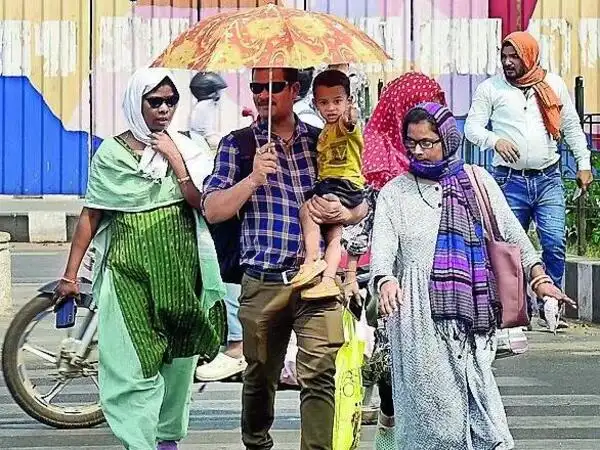
Bhubaneswar: The India Meteorological Department (IMD) has forecast that no significant change in temperature is expected across Odisha over the next three days, with hot and humid conditions likely to continue in several parts of the state.
According to the weather agency, isolated nor’wester (Kalbaisakhi) thunderstorm activity may occur at a few places on a daily basis. However, heat and humidity are expected to persist in coastal districts and adjoining regions at least till June 9.

The IMD stated that a trough line over central India is currently restricting the inflow of moisture-laden winds from the Bay of Bengal into the state. This has led to reduced atmospheric moisture and a sharp rise in temperatures. The system is expected to weaken gradually over the next two to three days, though heatwave-like conditions may continue in the interim period.
Meteorologists further indicated that thunderstorm activity is likely to increase from June 11, with chances of light rainfall across Odisha around June 13–14. This period could potentially mark the onset phase of the monsoon in the state, although officials said a clearer forecast will emerge in the coming days.
On Friday, several parts of Odisha experienced intense heat conditions. Boudh recorded the highest maximum temperature at 41.7°C, followed by Sambalpur at 41.2°C and Bhubaneswar and Angul at 41.1°C each. Jharsuguda, Balangir, Talcher, and Nayagarh also recorded around 41°C, while Hirakud, Paralakhemundi, Titlagarh, Dhenkanal, and Khordha hovered near 40°C. Coastal areas too remained hot, with Chandbali recording 39.6°C and Cuttack 39.4°C.
Despite Bhubaneswar’s maximum temperature of around 41°C, high humidity pushed the “feels-like” temperature close to 50°C, making conditions extremely uncomfortable for residents.
The IMD has advised people to remain cautious, stay hydrated, and avoid prolonged exposure to outdoor heat during peak hours.