

Smart City Vision Dims as Bhubaneswar’s Automated Traffic System Fails
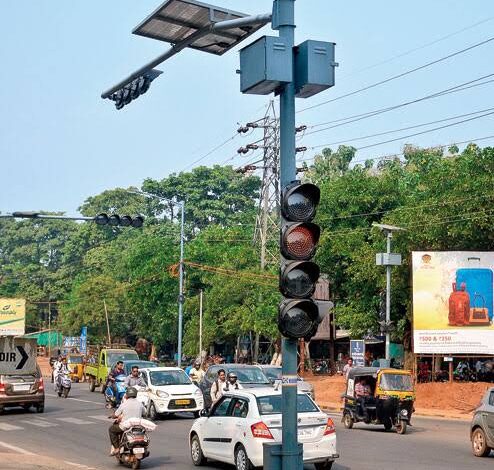
Bhubaneswar: The dream of transforming Bhubaneswar into a truly smart city appears to be losing steam, with several projects under the Smart City Mission now lying dormant. Among the most affected is the city’s much-touted automated traffic management system, which has largely gone offline, forcing traffic personnel to revert to manual operations.
At major intersections such as Kalpana Square, Rajmahal Square, Jayadev Vihar, Vani Vihar, Jagamara, and Ravi Talkies, traffic police can once again be seen manually controlling vehicles using hand-held red and green lights — a clear indication that the automated signals have stopped functioning.
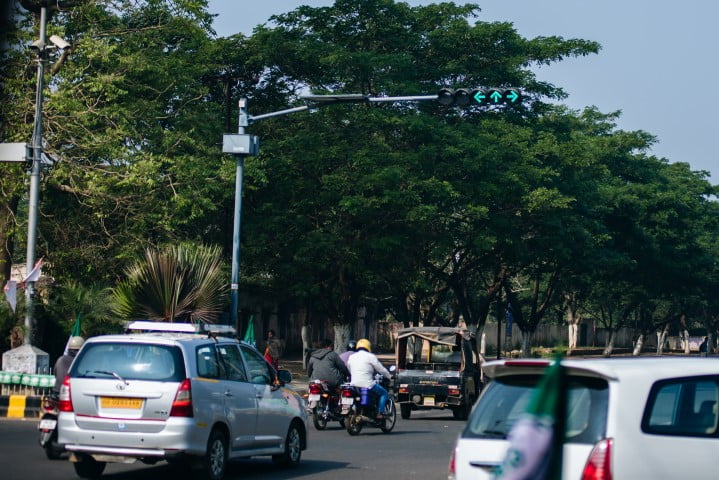
Bhubaneswar was selected among India’s first batch of smart cities in 2016, leading to the formation of Bhubaneswar Smart City Limited (BSCL) on February 23 that year. The agency was tasked with executing various urban modernisation projects, including the installation of advanced automated traffic signals to streamline vehicular movement and reduce the burden on traffic personnel.
Initially, the system delivered promising results. Traffic became more organised, and police officers were spared from standing for long hours under the scorching sun. However, over time, the once “smart” traffic posts have gradually turned defunct.
Today, countdown timers at most junctions no longer work, leaving commuters unsure of when the lights will change. During the day, the dim visibility of signals often leads to confusion, abrupt crossings, and traffic jams.
Residents have voiced strong dissatisfaction, citing chaotic traffic, wasted fuel, and frequent penalties caused by malfunctioning signals. Many feel that the city’s “smart” infrastructure is deteriorating due to poor maintenance and lack of accountability.
With the Smart City Mission’s momentum fading, Bhubaneswar’s once-celebrated model of urban innovation now stands as a reminder of unfulfilled promises and neglected technology.