
Kalinga Stadium Hosts Global Athletics Spectacle, Showcasing India’s Rising Sporting Power

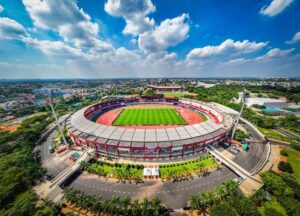
Bhubaneswar: The Kalinga Stadium in Bhubaneswar on Saturday witnessed a high-quality international athletics spectacle as elite competitors from across the world assembled for the World Athletics Continental Tour Silver meet, underlining Odisha’s growing reputation as a major destination for global sporting events.
The event brought together athletes from 27 countries, including several leading names from the international athletics circuit. A total of 187 elite athletes, including 88 Indians, took part in 18 events comprising nine men’s and nine women’s competitions.
Athletes from countries such as Great Britain, Jamaica, Kenya, Italy, Japan, South Africa, Brazil, Nigeria and Portugal added an international dimension to the competition. The field also included 36 athletes ranked among the world’s top 50, making the meet an important platform for high-level competition.
The World Athletics Continental Tour Silver is the second-highest level of the Continental Tour, offering athletes an opportunity to earn valuable World Ranking points while competing for a total prize purse of US$75,000.
For Indian athletes, the Bhubaneswar meet provided an important opportunity to compete against international opposition on home soil. The exposure is expected to help athletes assess their performance against global standards and build confidence ahead of major upcoming competitions, including the Asian Games-related athletics calendar.
Kalinga Stadium strengthens global sporting profile
The successful hosting of the Continental Tour meet further adds to Kalinga Stadium’s growing list of international sporting events.
Odisha has invested heavily in sports infrastructure and high-performance facilities over the past decade, helping Bhubaneswar emerge as one of India’s prominent sporting destinations. The city has previously hosted major athletics competitions, including the 22nd Asian Athletics Championships in 2017.
With international-standard facilities and continued investment in sports development, Kalinga Stadium has increasingly become a familiar venue for elite athletes from around the world.
The latest event also reflects Odisha’s broader effort to build a strong sporting ecosystem extending beyond hosting competitions. The state’s emphasis on training infrastructure, coaching and opportunities for young athletes has contributed to its growing sporting identity.
Athletics draws global attention
Athletics, often regarded as the foundation of competitive sport, brings together sprinting, middle-distance running, jumping and throwing disciplines. Success at the highest level demands years of physical preparation, technical refinement and mental resilience.
The competition at Kalinga offered spectators an opportunity to witness these qualities at close quarters, with races decided by fractions of a second and field events often separated by just centimetres.
The presence of Indian athletes alongside established international competitors also highlighted the progress being made in the country’s athletics programme.
India’s emergence on the global athletics stage has gathered momentum in recent years, led by Olympic and world champion javelin thrower Neeraj Chopra and supported by a new generation of sprinters, jumpers and throwers.
Bhubaneswar’s evolving sporting identity
Known historically as the Temple City, Bhubaneswar is increasingly developing a parallel identity as a sporting city.
The hosting of major international competitions has helped bring global athletes, coaches and sporting officials to Odisha while giving local spectators and young athletes the opportunity to experience world-class competition.
The Continental Tour Silver meet is another step in that journey, placing Bhubaneswar in the international athletics spotlight and showcasing the city’s ability to host events involving athletes from across continents.
For spectators, the competition was more than a day of races, jumps and throws. It offered a glimpse into the dedication and determination required to compete at the highest level.
As athletes from 27 nations shared the Kalinga track and field, the event reflected the changing face of Indian sport—where international competition is increasingly being hosted on home soil and Indian athletes are seeking to compete on equal terms with the world’s best.
The Kalinga Stadium, therefore, stood not just as a venue for another athletics competition, but as a symbol of Odisha’s expanding sporting ambitions and Bhubaneswar’s emergence on the global athletics map.