
Alarnath Temple Witnesses Surge of Devotees as Jagannath Temple Observes Anasara Ritual
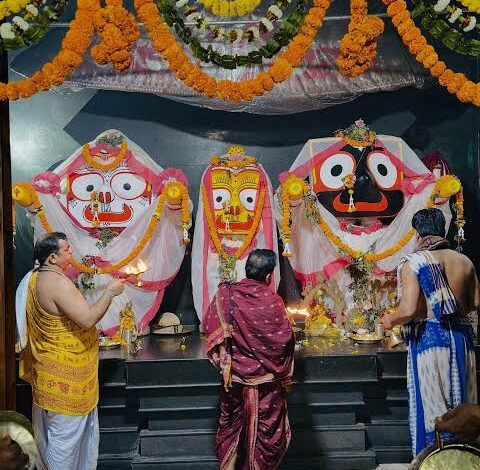
Bhubaneswar: With the commencement of the sacred Anasara period following Deba Snana Purnima, thousands of devotees have started thronging the historic Alarnath Temple at Brahmagiri in Odisha’s Puri district. As Lord Jagannath, Lord Balabhadra, and Devi Subhadra remain away from public view for the next 15 days, devotees believe that offering prayers at Alarnath Temple during this period brings the same spiritual merit as having darshan of Lord Jagannath.
According to tradition, the sibling deities fall ill after the ceremonial bathing ritual on Snana Purnima and are shifted to the Anasara Gruha inside the Shree Jagannath Temple. During this period, they undergo a symbolic period of rest and recuperation and are worshipped in a secret ritualistic form through the ‘Pati Deities’. Public darshan inside the temple remains suspended until the deities reappear during Nabajouban Darshan ahead of the annual Rath Yatra.

As part of the rituals, the deities are treated with Phuluri Tela, a traditional herbal oil prepared using medicinal herbs and natural ingredients. The ceremonial treatment represents an age-old practice of restoring the deities’ health before they resume public appearances.
During Anasara, the famous Anasara Patti—sacred patta paintings depicting Lord Jagannath, Lord Balabhadra, and Devi Subhadra—are worshipped in place of the deities inside the 12th-century shrine. Darshan of Patitapabana, the symbolic image of Lord Jagannath located beside the Simha Dwara (Lion’s Gate), also remains closed throughout the seclusion period.
The Alarnath Temple, situated around 23 kilometres from Puri, becomes the focal point of devotion during these fifteen days. Large numbers of pilgrims visit the shrine every year to seek blessings of Lord Alarnath, believed to be a manifestation of Lord Vishnu, and to partake in the temple’s renowned khiri, a sweet rice pudding offered as Mahaprasad.
The temple also holds immense historical significance. Historians believe its name originated from the rulers of Alwar in present-day Rajasthan, giving rise to the name Alwarnath, which gradually evolved into Alarnath. The shrine gained widespread prominence after the visit of Sri Chaitanya Mahaprabhu in 1510 AD. It is believed that the saint experienced a divine vision of Lord Jagannath at the temple and spent considerable time in worship there, further elevating its spiritual importance.
The origins of the temple are traced back to the 9th century and are associated with King Vanudev IV. It later underwent major renovation and received patronage in the early 12th century under the guidance of the philosopher-saint Sri Ramanujacharya, helping establish it as one of Odisha’s most revered pilgrimage centres, especially during the annual Anasara observances.