
Central Inter-Ministerial Team Assesses Cyclone Arnab Damage in Odisha; Pledges Support for Resilient Infrastructure
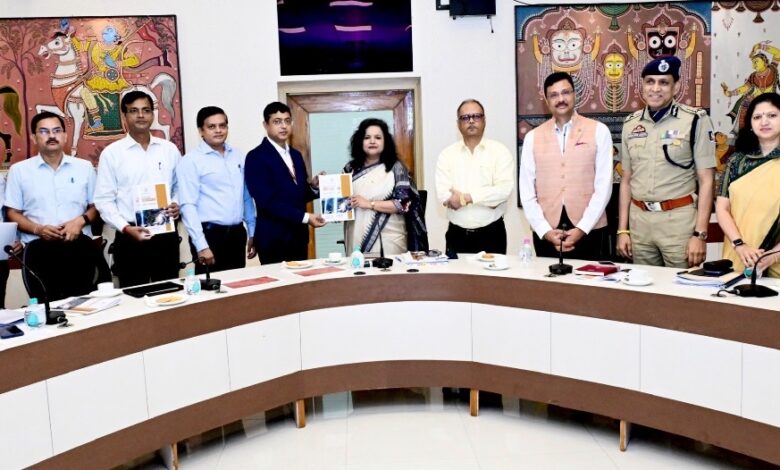
Bhubaneswar: An eight-member Central Inter-Ministerial Team led by Union Home Ministry Joint Secretary Ravi Shankar conducted a preliminary review meeting at Lok Seva Bhawan on Thursday following a two-day field assessment of the damage caused by Cyclone Arnab and subsequent flooding in Odisha.
Chaired by Odisha Chief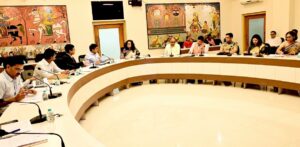 Secretary Anu Garg and hosted by Special Relief Commissioner Rajesh Prabhakar Patil, the high-level meeting brought together key central officials representing the ministries of Agriculture, Finance, Water Commission, Electricity, Highways, Rural Development, and ISRO’s National Remote Sensing Centre alongside senior state administrators to evaluate initial loss reports, streamline relief operations, and plan long-term reconstruction.
 The central delegation presented field observations from their visits to severely affected areas in Gajapati and Ganjam districts on November 3 and 4, highlighting widespread destruction across standing crops, road networks, power distribution infrastructure, river embankments, canals, fish ponds, and livestock. With district collectors reporting that exhaustive damage assessments are still underway due to the sheer scale of the disaster, the central team recommended executing a detailed house-to-house survey to ensure no affected family is left out. The Union delegation assured the state government of full central assistance to support ongoing relief efforts and reconstruct essential public assets.
Deliberations focused heavily on upgrading infrastructure to withstand future extreme weather events rather than relying solely on temporary fixes. State and central officials emphasized the need for permanent, climate-resilient solutions, including raising the height and structural strength of vulnerable river embankments and canal systems, as well as permanently upgrading temporarily restored national highways, rural roads, and bridges. Chief Secretary Anu Garg outlined Odisha’s disaster management evolution since the 1999 Super Cyclone, reaffirming the state’s commitment to proactive preparedness, rapid deployment, and building robust institutional capacity to minimize future climate risks and safeguard public life and property.