
Odisha CM Welcomes Union Cabinet’s Approval of ₹14,500-Crore Viability Gap Funding for Energy Storage Infrastructure
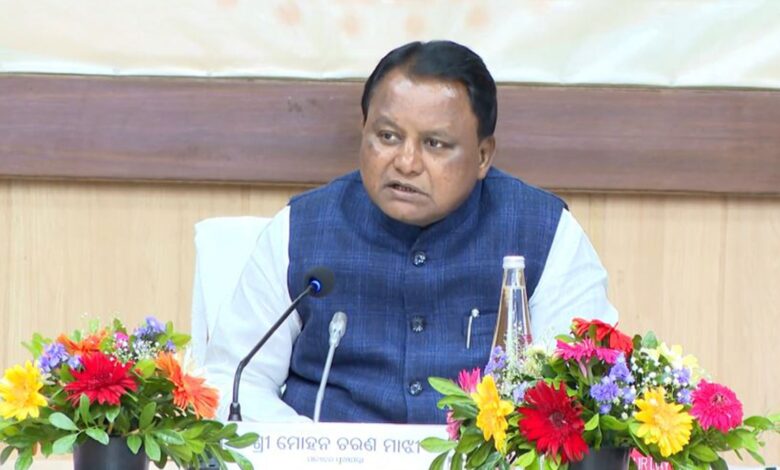
Bhubaneswar : Odisha Chief Minister Mohan Charan Majhi has welcomed the Union Cabinet’s decision to approve a ₹14,500-crore Viability Gap Funding (VGF) scheme for grid-scale energy storage projects. Highlighting its impact on the state’s green transition, CM Majhi stated that the move would significantly bolster renewable energy infrastructure and ensure round-the-clock power supply.
The announcement comes on the heels of Odisha securing ₹1.17 lakh crore in investment proposals for clean energy projects at the Bharat Renewable Energy Summit and Exhibition 2026 in New Delhi. The proposed investments aim to generate 11,742 MW of power,  with a major focus on pumped storage projects (PSPs) accounting for 7,200 MW involving an outlay of ₹48,863 crore.
Taking to social media platform X, CM Majhi emphasized that the central scheme would support Battery Energy Storage Systems (BESS), Pumped Storage Projects (PSPs), and emerging clean energy technologies. He added that the initiative would drive seamless integration of renewables into the power grid, enhance reliable supply, and boost domestic battery manufacturing to lower import dependence.
Echoing the Chief Minister’s sentiment, Deputy Chief Minister and Energy Minister KV Singh Deo affirmed that Odisha is fully prepared to play a key role in achieving the national mission through energy innovation and sustainable development. 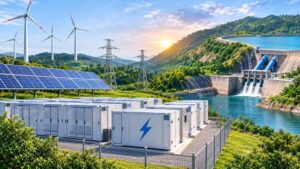
The central VGF framework targets a total storage deployment of 92 GWh—comprising 60 GWh of hydro-pumped storage, 30 GWh of battery storage, and 2 GWh through alternative storage solutions—with an overall estimated investment of ₹97,600 crore.
Projects under the scheme will be awarded through tariff-based competitive bidding. Distribution companies (DISCOMs) in both the public and private sectors will be eligible for funding support for battery and hydro-pumped storage projects, while all public and private entities can participate in deploying alternative storage technology projects.