
Odisha Announces Special Relief Package for Cyclone Arnab Victims
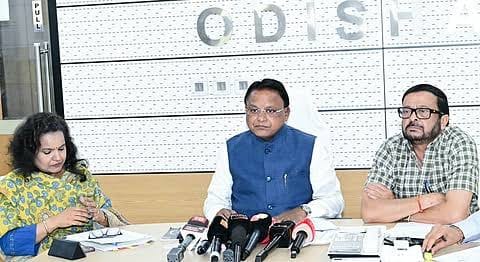
Odisha Chief Minister Mohan Charan Majhi has announced a comprehensive relief package for families and sectors affected by Cyclone Arnab and subsequent floods. Each affected family will receive 50 kg of rice and ₹2,500 as immediate assistance.
Farmers suffering crop losses of 33% or more will get input subsidies of ₹8,500 per hectare for non-irrigated land, ₹17,000 for irrigated land and ₹22,500 for perennial crops, up to two hectares. An additional ₹18,000 per hectare will be provided for removing sand and silt from farmland. The government will also distribute 1.75 lakh seed kits and offer a 75% subsidy on chemical and bio-pesticides for the 2026-27 Rabi season. Eligible short-term crop loans will be converted into medium-term loans.

Families with fully damaged houses will receive ₹1.2 lakh in plain areas and ₹1.3 lakh in hilly regions. Compensation for partially damaged pucca and kutcha houses will be ₹6,500 and ₹4,000 respectively. Additional assistance has been announced for damaged huts, cattle sheds, clothing and household items.
The package also covers livestock losses, fishermen, fish farmers, SHGs, weavers, artisans, traders and small businesses. Compensation includes ₹37,500 for each lost milch animal, ₹4,000 for sheep, goats and pigs, and ₹32,000 for draught animals. Eligible SHGs, weavers and artisans will receive ₹5,000 each, while affected MSMEs can access loans up to ₹12 lakh with a 25% subsidy, capped at ₹3 lakh.
Street vendors will receive ₹10,000 and affected shops ₹25,000. Fishermen will be compensated for damaged boats and nets, while fish farmers can receive up to ₹1.75 lakh per hectare for damaged community ponds.
Reviewing the relief operations, Majhi said an eight-member Central team would visit Odisha from November 2 to 4 to assess cyclone and flood damage in Ganjam, Gajapati and Kandhamal. He also directed officials to continue relief operations amid the possible threat of Cyclone Murasu and ensure damaged lift irrigation facilities are repaired before the Rabi season.