

Supreme Court Directs Attorney General, Solicitor General to Be Involved in Key BCI Decisions
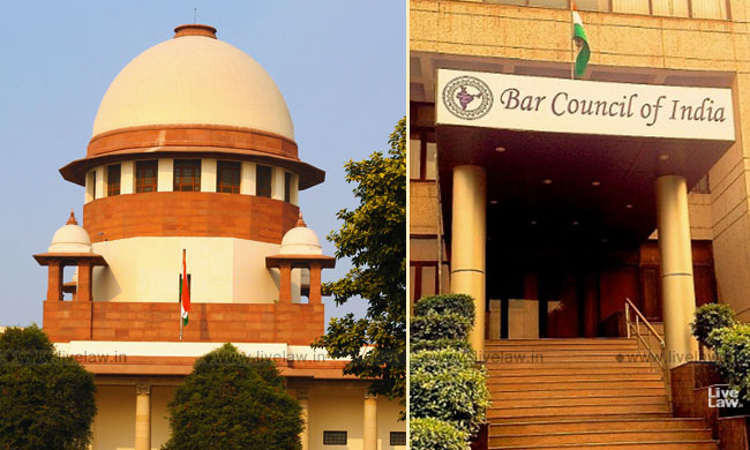
The Supreme Court on Wednesday issued significant directions regarding the functioning of the Bar Council of India (BCI), saying that all major policy decisions of the body should be placed before Attorney General R. Venkataramani and Solicitor General Tushar Mehta until a newly elected BCI is constituted.
A bench comprising Chief Justice of India Surya Kant, Justice Joymalya Bagchi and Justice V. Mohana directed that the Attorney General and Solicitor General be invited to relevant BCI meetings during this interim period.
State Bar Councils Asked to Complete Elections
The court directed all State Bar Councils that have been reconstituted to elect their statutory office-bearers and representatives to the BCI within two weeks from the date their new composition is notified.
The State Bar Councils will also have to submit compliance reports to the Supreme Court. After receiving these reports, the court will consider the issue of reconstituting the BCI.
The proceedings also included a plea seeking the removal of BCI Chairman Manan Kumar Mishra. Petitioners argued that under BCI rules, the chairman and vice-chairman are supposed to serve two-year terms, but a notification issued in April 2025 extended their tenure to five years, potentially continuing until 2030. The Supreme Court, however, did not pass any adverse order against Mishra on Wednesday.
Court Questions Five-Year Tenure
During the hearing, senior advocate Madhavi Divan referred to the April 21, 2025 notification extending the tenure of the BCI chairman and vice-chairman. Justice Bagchi questioned the legal basis for fixing a five-year term when BCI Rule 12(2) reportedly provides for a two-year tenure.
The bench also raised questions over whether an executive notification could override a term prescribed under the rules. However, the court has not yet given a final ruling on the validity of the five-year tenure notification.
The hearing also touched upon the PEARL Trust allegedly created by the BCI. Questions were raised over the appointment of certain individuals as permanent managing trustees, potentially allowing them to continue in those roles even after their BCI membership ends.
The bench observed that there could be a distinction between trusteeship linked to an official position and making an individual a permanent trustee in a personal capacity.
The court clarified that its focus is on the functioning and legal framework of the institution rather than targeting any individual. For now, its priority is to complete the pending electoral process in the State Bar Councils and pave the way for the reconstitution of the BCI.