

PM Modi Congratulates ISRO on Successful Launch of NavIC Satellite NVS-03
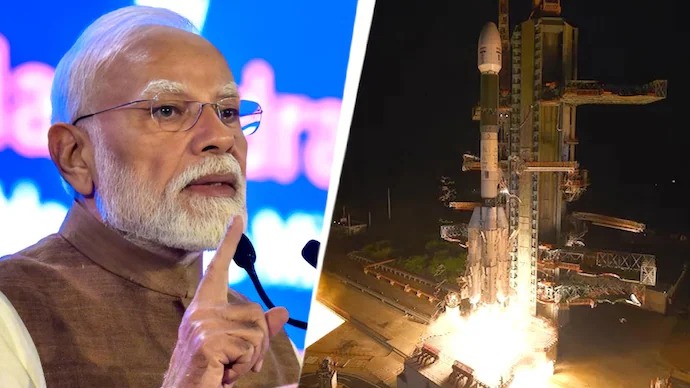
New Delhi, Oct 31: Prime Minister Narendra Modi on Saturday congratulated the scientists and engineers of the Indian Space Research Organisation (ISRO) on the successful launch of GSLV-F18 carrying NVS-03, the third satellite in India’s second-generation NavIC constellation.
In a post on X, the Prime Minister described the mission as a significant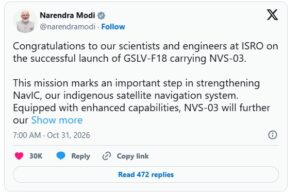 step towards strengthening India’s indigenous satellite navigation capabilities and technological self-reliance.
He said NVS-03, equipped with enhanced capabilities, would strengthen the Navigation with Indian Constellation (NavIC) system and support navigation services for the country.
Successful Launch
ISRO successfully launched the GSLV-F18 rocket carrying the 2,232-kg NVS-03 satellite from the Satish Dhawan Space Centre in Sriharikota, Andhra Pradesh, at 11:51 pm on Friday.
The 50-metre-tall, three-stage launch vehicle was tasked with placing the satellite into a Geosynchronous Transfer Orbit (GTO). Following deployment, the satellite will undergo orbit-raising manoeuvres to reach its designated geosynchronous position at 32.5 degrees East.
Boost to Indigenous Navigation
NVS-03 is the third satellite in the second-generation NVS series, developed to strengthen India’s regional navigation system, NavIC, and ensure continuity of navigation services.
The satellite features an indigenous atomic clock and carries the L1 navigation signal alongside the existing L5 and S-band signals, enhancing the accuracy and utility of the navigation network.
NavIC provides Position, Velocity and Timing (PVT) services across India and an area extending approximately 1,500 km beyond the country’s boundaries.
ISRO plans to deploy five second-generation navigation satellites to augment the existing constellation, introduce advanced capabilities and ensure uninterrupted services.
The latest launch marks another important milestone in India’s efforts to strengthen its self-reliant space infrastructure and reduce dependence on foreign satellite navigation systems.