
Raksha Bandhan 2026: A Festival That Celebrates Love, Trust and the Bond of Siblings
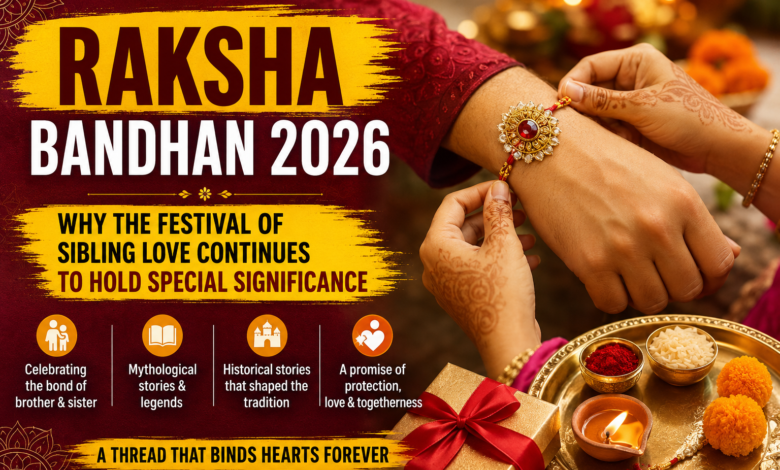
Bhubaneswar: As families across India prepare to celebrate Raksha Bandhan, the festival once again brings the timeless relationship between brothers and sisters into focus. Marked with the tying of rakhis, exchange of sweets and gifts, and family gatherings, the occasion is rooted in the values of affection, responsibility and mutual support.
Raksha Bandhan is observed on the full moon day, or Purnima, of the Hindu month of Shravana. The festival generally falls in August and has remained an important part of India’s cultural and social traditions for centuries.
The word Raksha Bandhan combines two Sanskrit terms—‘Raksha’, referring to protection, and ‘Bandhan’, meaning a bond or tie. The central ritual involves a sister tying a rakhi on her brother’s wrist and offering prayers for his well-being and prosperity. The brother traditionally responds by giving her a gift and promising to stand beside her in times of need.
However, the meaning of the festival has expanded over generations. Raksha Bandhan is not confined to brothers and sisters by birth. Cousins and other members of extended families also participate in the celebrations, while the rakhi itself has come to represent relationships based on trust, affection and a sense of responsibility.
Legends Behind the Festival
The origins of Raksha Bandhan are associated with several stories from Hindu scriptures and mythology, rather than a single definitive account.
One of the early references is found in the Bhavishya Purana, where Sachi, the wife of Lord Indra, is believed to have tied a sacred thread to his wrist before a battle with the demons. The thread was regarded as a source of divine protection and strength.
The practice of tying protective threads also had a broader significance in ancient traditions. Such sacred threads were not necessarily restricted to sibling relationships and were sometimes associated with blessings and protection for men preparing to undertake battles or difficult journeys.
Another popular legend centres on Lord Vishnu and King Bali. After Vishnu granted Bali a boon and agreed to stay at his palace, Goddess Lakshmi wanted to return to Vaikuntha. According to the story, she tied a sacred thread on Bali’s wrist and accepted him as her brother. When Bali offered her a gift, Lakshmi asked him to allow Vishnu to return with her. The demon king honoured her request.
A separate tradition connects Raksha Bandhan with Lord Ganesha’s sons, Shubh and Labh. According to the legend, the brothers wished for a sister with whom they could celebrate the festival. Santoshi Maa is subsequently said to have emerged through divine intervention.
The Mahabharata also features stories that are popularly associated with the tradition of protective threads. One account describes Draupadi tying a piece of cloth around Krishna’s wrist, while another popular belief says Kunti blessed Abhimanyu with a protective thread before he went to war.
Historical Stories and Popular Traditions
Several historical narratives have also become part of the popular understanding of Raksha Bandhan.
One such story is associated with Alexander’s campaign in India. According to popular tradition, Alexander’s wife sent a rakhi to King Purushottam of Punjab, seeking protection for her husband. The story is often cited as an example of how the rakhi came to symbolise a bond that could cross political and cultural boundaries.
Another famous account involves Rani Karnavati of Chittor and Mughal Emperor Humayun. Popular historical narratives state that Karnavati sent Humayun a rakhi when Chittor faced a threat from Bahadur Shah of Gujarat. Humayun is said to have responded to the appeal and moved to assist her.
While historians have debated the accuracy and details of some of these accounts, they continue to form an important part of the cultural stories surrounding the festival.
A Bond That Goes Beyond Tradition
In contemporary India, Raksha Bandhan has taken on a broader meaning. The traditional idea of a brother protecting his sister has increasingly evolved into a relationship based on mutual care, respect and emotional support.
For many families, the festival is an opportunity to reconnect with siblings, particularly those living in different cities or countries. The rakhi may be simple, but the sentiment behind it remains significant—a reminder that family bonds can provide strength and support throughout life.
From traditional ceremonies at home to modern celebrations involving online rakhi deliveries and virtual family gatherings, Raksha Bandhan continues to adapt with changing times while retaining its central message of love and togetherness.
Ultimately, the festival is not merely about a thread tied around a wrist. It is a celebration of the memories, responsibilities and affection that make the bond between siblings one of the most enduring relationships in family life.