
Odisha Rolls Out Gyanodaya SOP, Mandates 75% Attendance for Free KG-to-PG Education
The Odisha government has formally outlined the operational framework for its ambitious Gyanodaya–Shikshya Ru Samruddhi programme, introducing strict eligibility norms that students must meet to receive free education from kindergarten to postgraduate level. At the centre of the newly issued Standard Operating Procedure (SOP) is a requirement that beneficiaries maintain at least 75 per cent attendance during an academic year, with only limited relaxation permitted under exceptional circumstances.
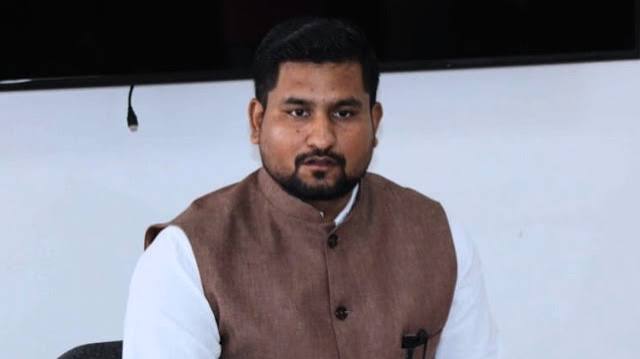
The SOP, released by the Higher Education Department, seeks to standardise the implementation of the flagship scheme across institutions while ensuring that public funds are directed towards genuine beneficiaries. As reported by The New Indian Express, Higher Education Minister Suryabanshi Suraj said the guidelines are intended to make the rollout transparent, prevent misuse and ensure that financial hardship does not become a barrier to higher education.
The attendance condition is among the scheme’s most significant eligibility criteria. Students must record 75 per cent classroom attendance to continue receiving benefits under Gyanodaya. Even where permissible relaxation is granted, attendance cannot fall below 65 per cent under any circumstances, according to the SOP.
The free education initiative, however, will not apply universally across all academic programmes. The government has excluded self-financing courses, private unaided institutions, public-private partnership (PPP) institutions, correspondence and distance education, open learning programmes, and professional courses such as MBA, MCA and BEd from its ambit. Instead, the fee waiver will be available only to students enrolled in eligible regular undergraduate and postgraduate programmes offered by state public universities, government colleges and government-aided colleges covered under the state’s grant-in-aid system.
Students who have already deposited admission fees for the current academic session will not lose out under the new policy. The minister said such students would receive refunds in accordance with government guidelines. He also assured colleges and universities that the implementation of Gyanodaya would not result in financial losses, as the state government would reimburse eligible institutions for the fees waived under the scheme.
Alongside the SOP, the government has decided to establish a state-level Fee Regulation Committee to oversee the fee structure of courses covered by Gyanodaya. The committee will be chaired by the Secretary of the Higher Education Department and will include representatives from the Finance Department, Planning and Convergence Department, School and Mass Education Department, besides universities and other concerned agencies. Its mandate will be to bring uniformity and oversight to fee regulation under the programme.
Explaining the broader objective behind the initiative, Suraj said the government expects the scheme to improve Odisha’s Gross Enrolment Ratio (GER) in higher education, which currently remains below the national average. He added that Gyanodaya aligns with the vision of the National Education Policy (NEP) 2020, which advocates expanding equitable access to education.
The SOP marks the next phase of a programme approved by the Odisha Cabinet earlier this month. Introduced from the 2026-27 academic session, Gyanodaya–Shikshya Ru Samruddhi has been projected by the state government as India’s first universal KG-to-PG free education initiative covering eligible students in government and government-aided institutions. The latest guidelines are expected to provide administrative clarity as educational institutions begin implementing the scheme across the state.