
Indigenous Cattle Breeds Steal Spotlight at Matsya-Pranee Samavesh Odisha 2026
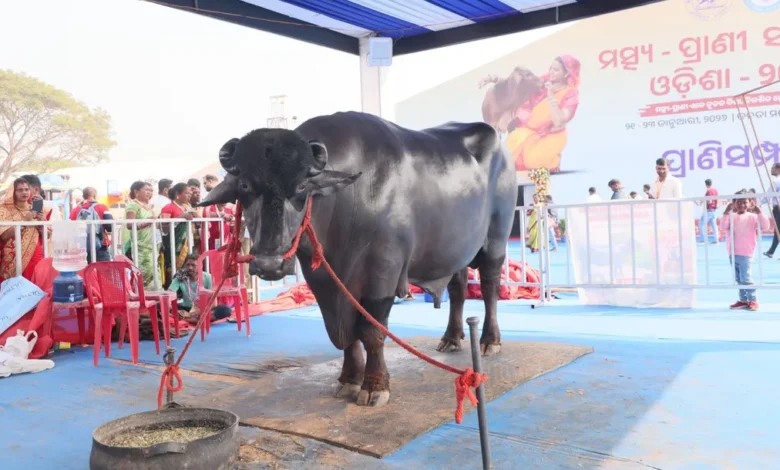
Bhubaneswar: Indigenous cattle breeds have emerged as a major attraction at the ongoing Matsya-Pranee Samavesh Odisha (MPSO-2026) in Bhubaneswar, drawing significant interest from visitors and livestock farmers alike. The three-day conclave was inaugurated by Chief Minister Mohan Charan Majhi on Wednesday.
Among the standout exhibits is Inder, a Murrah bull that has captured widespread attention for its remarkable size and genetic potential. At just 4.5 years old, Inder weighs an impressive 17 quintals, showcasing exceptional growth, strength and breed characteristics. The daily maintenance cost of the bull is around ₹4,000.
Inder hails from the Karamveer Breeding Farm in Kurukshetra, Haryana, and represents advanced, scientifically bred Murrah genetics. According to the Fisheries and Animal Resources Development (F&ARD) Department, the bull’s powerful frame, balanced body structure and commanding presence place it among elite buffalo breeding stock.
The department said Inder is maintained under a strictly monitored, nutrition-rich feeding programme aimed at maximising health, fertility and longevity. Its daily diet includes around 28 kilograms of feed comprising five litres of milk, two kilograms of curd, green chickpeas, broken wheat, wheat, pearl millet and soybean. With rising demand for high-quality Murrah genetics, Inder’s estimated market value is pegged at around ₹4 crore.
Another key attraction at the conclave is a five-year-old Kankrej bull, known for the breed’s distinctive lyre-shaped horns, strong skeletal frame and well-proportioned body. Standing about five feet tall and weighing approximately 700 kilograms, the bull reflects excellent growth, robustness and functional efficiency.
To maintain peak health and performance, the Kankrej bull is provided a carefully structured diet that includes green gram, oil cakes, broken wheat, concentrated feed, chickpea, rice bran and sesame bran. This nutrient-rich regimen supports muscle strength, stamina and fertility. The monthly expenditure on feed and maintenance for the bull is around ₹40,000, the department said.
Renowned as a dual-purpose breed, the Kankrej is valued for both its draught power and its strong genetic contribution to milk productivity and crossbreeding programmes. Its adaptability to harsh climatic conditions, disease resistance and long working life make it a preferred breed among progressive farmers and breeders.
Officials said the strong interest shown in indigenous breeds at MPSO-2026 highlights growing awareness about sustainable livestock farming and the importance of preserving native genetic resources.