

Delhi Records ‘Poor’ AQI Amid Shallow Fog
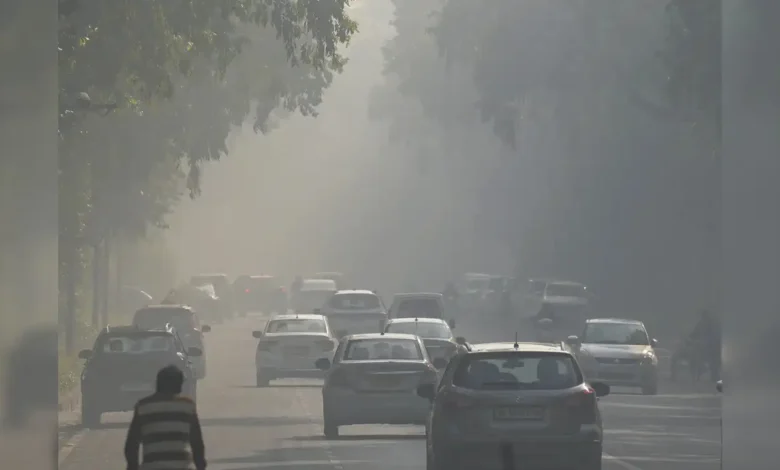
New Delhi: The national capital woke up to shallow fog and slightly warmer temperatures on Monday, signaling a gradual transition out of winter, even as air quality remained a concern. The Air Quality Index (AQI) stood at 206 at 7 a.m., placing it in the ‘poor’ category, according to data from the Central Pollution Control Board (CPCB).
Several monitoring stations across Delhi recorded AQI levels ranging from moderate to poor. Anand Vihar reported an AQI of 289, Bawana 259, ITO 216, Jawaharlal Nehru Stadium 213, Patparganj 208, and Rohini 260. Other areas such as DTU recorded 206, while Chandni Chowk (193), IGI Airport T3 (179), IIT Delhi (155), North Campus (135), and Pusa (159) remained in the moderate range.
In neighbouring Noida, air quality also remained a concern. AQI levels were recorded at 237 in Sector-125, 154 in Sector-62, 192 in Sector-1, and 195 in Sector-116.
As per AQI classification, readings between 0–50 are considered ‘good’, 51–100 ‘satisfactory’, 101–200 ‘moderate’, 201–300 ‘poor’, 301–400 ‘very poor’, and 401–500 ‘severe’.
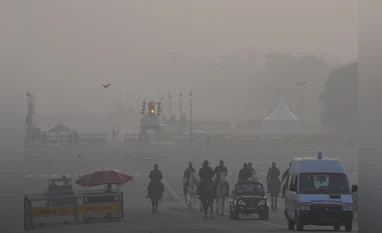
Delhi recorded a minimum temperature of 9°C on Monday. Shallow fog during the morning hours affected visibility in some areas, though no major disruptions were reported. The city is expected to witness similar shallow fog and mist conditions over the next few days.
According to the India Meteorological Department (IMD), mist is likely to persist between February 10 and 14, especially during early mornings and late nights. Daytime temperatures are expected to range between 23°C and 25°C, while minimum temperatures may hover between 10°C and 12°C. Humidity levels are forecast to remain between 50 and 60 per cent.
Despite the seasonal transition, pollution levels continue to remain elevated in many parts of the city, raising health concerns, particularly during early hours when fog combines with pollutants and worsens air quality.
Meanwhile, the Commission for Air Quality Management (CAQM) on Sunday said that 12 cities across the National Capital Region (NCR), along with Delhi and four NCR states, have submitted detailed pollution mitigation plans for this year.
Besides Delhi, Uttar Pradesh, Haryana, and Rajasthan have proposed sector-specific strategies to reduce annual average AQI and particulate pollution. NCR cities that submitted action plans include Agra, Meerut, Noida, Greater Noida, Ghaziabad, Karnal, Faridabad, Gurugram, Manesar, Panipat, Rohtak, and Sonipat.
Delhi’s action plan sets a target to reduce its annual average AQI by 15 per cent in 2026 compared to the average of the previous five years. It also aims for a 15 per cent reduction in annual average PM2.5 levels and a 20 per cent cut in PM10 concentrations.